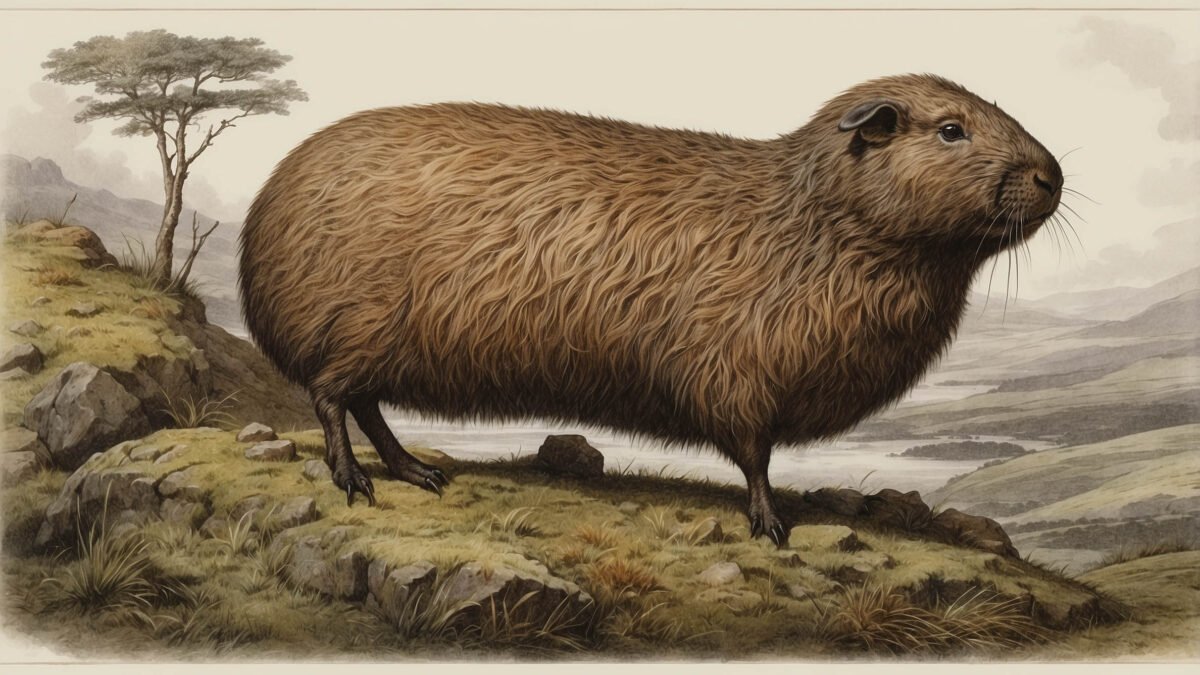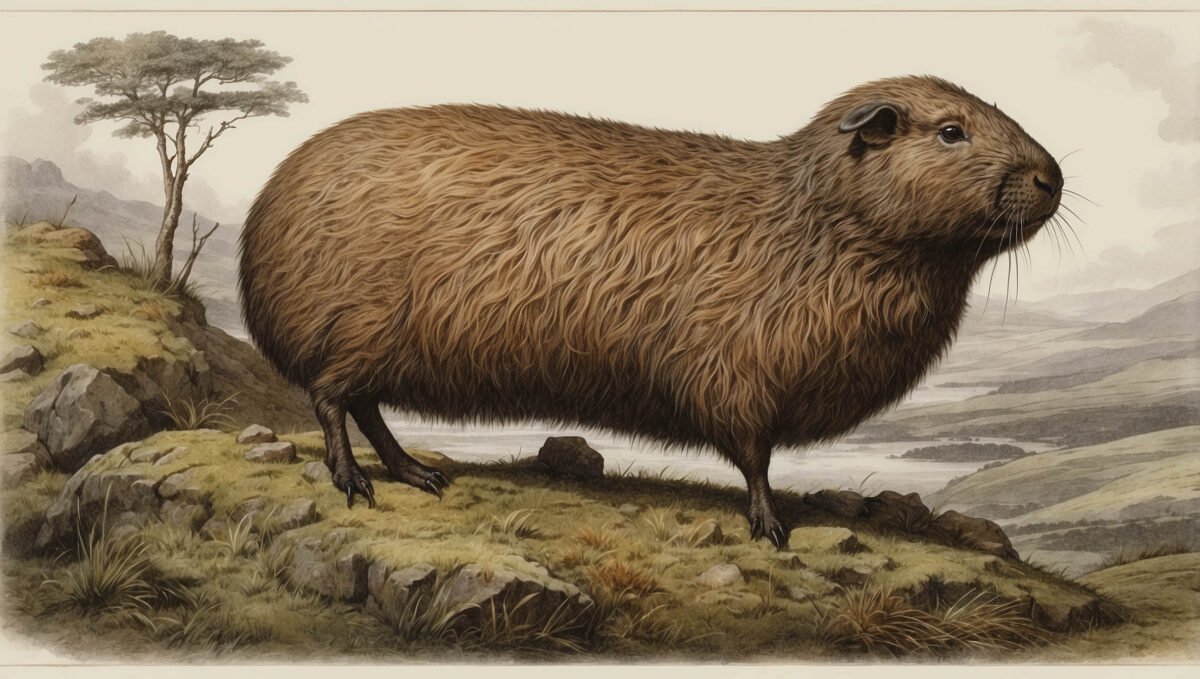

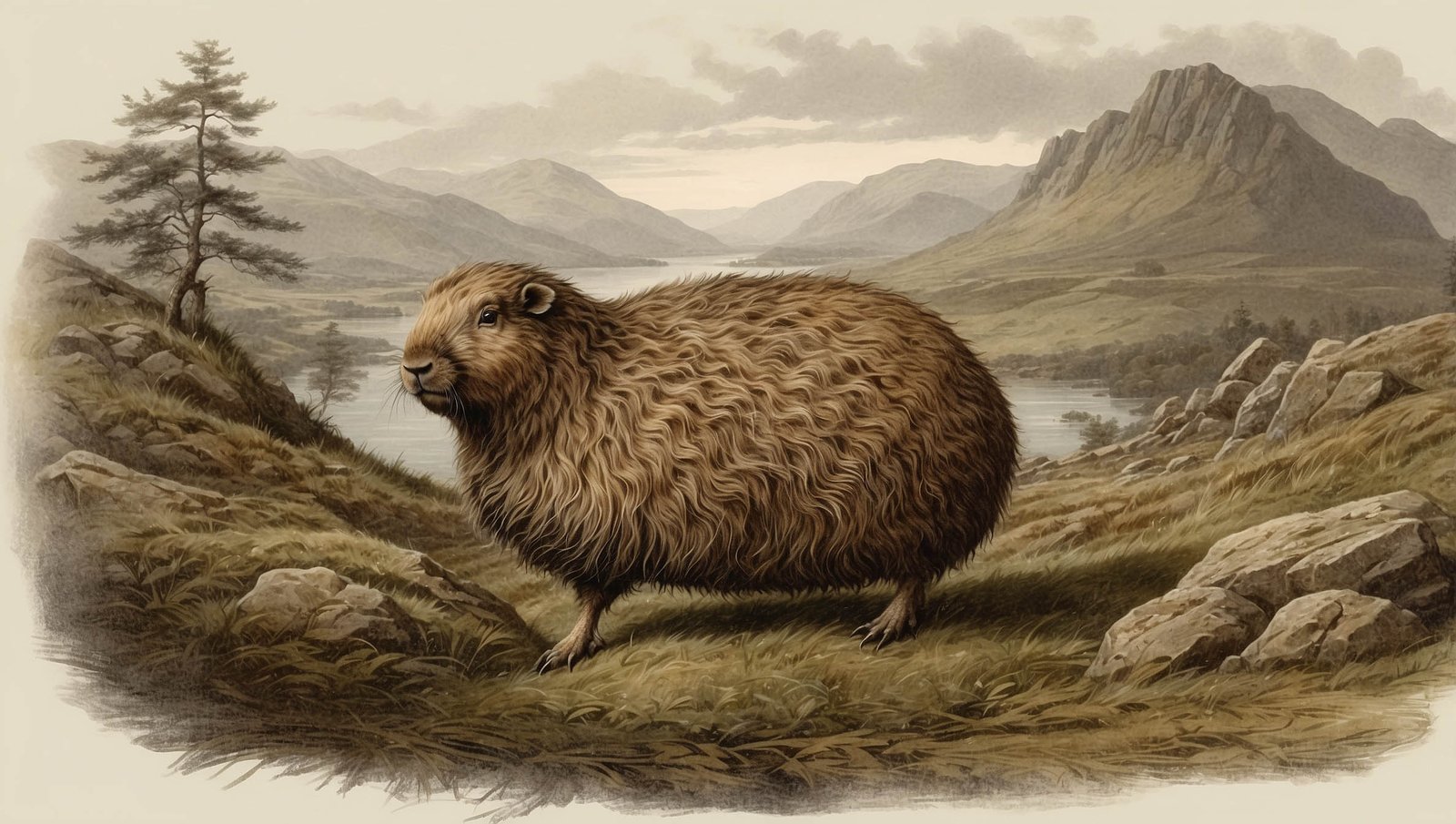
Haggis Scottii Sinistrous
Haggis Scottii Sinistrous: In contrast, this breed travels anticlockwise, supported by its shorter left legs.
This unique configuration is ideally suited to the left-tilting terrains they inhabit, allowing them to effectively manoeuvre through their environment. The anticlockwise movement of the Haggis Scottii Sinistrous is not merely a physical trait but a refined adaptation to the ecological demands of their specific habitats, enhancing their ability to forage and escape from threats.
Taxonomic Overview
Haggis scottii sinistrous forms a complementary counterpart to its clockwise relative. It occupies similar Highland regions, though it favours slopes that tilt in the opposite direction. The defining trait lies in its anticlockwise movement, which shapes nearly every aspect of its behaviour.
Morphology and Limb Asymmetry
The species shows a clear imbalance in limb length. The left legs remain shorter and more compact, while the right extend further and provide reach. This structure angles the body into the slope. Muscle distribution appears denser on the left, which improves grip and control during movement.
Locomotion and Directional Behaviour
The haggis moves in a steady anticlockwise path. Each step follows a tight, curved line along the terrain. The downslope side maintains frequent ground contact, which reduces slipping. Movement appears rhythmic, almost mechanical, yet it adapts quickly when obstacles appear.
Feeding Strategy
The species grazes on grasses, moss, and low shrubs typical of upland zones. It follows contour lines rather than climbing directly. This pattern limits energy loss. While feeding, the body tilts slightly inward, which helps maintain balance on uneven ground.
Predator Interaction
Predators find its motion difficult to predict. The anticlockwise loops disrupt straight-line pursuit. The animal relies on tight turns and stable footing to escape. Its directional bias often forces predators into awkward angles, reducing their speed.
Ecological Function
The species contributes to its environment through constant surface disturbance. Its repeated paths loosen soil and may assist seed spread. It fills a narrow ecological niche, shaped by slope direction and vegetation patterns.
Reproductive Notes
Reproductive behaviour remains uncertain. Some observations suggest that successful pairing requires shared rotational alignment. Opposing movement patterns could create instability. Reports of interaction with clockwise variants exist, though evidence remains limited.