

Wild Forest Haggis
March 24, 2026
The Most Famous Wild Haggis
April 26, 2026
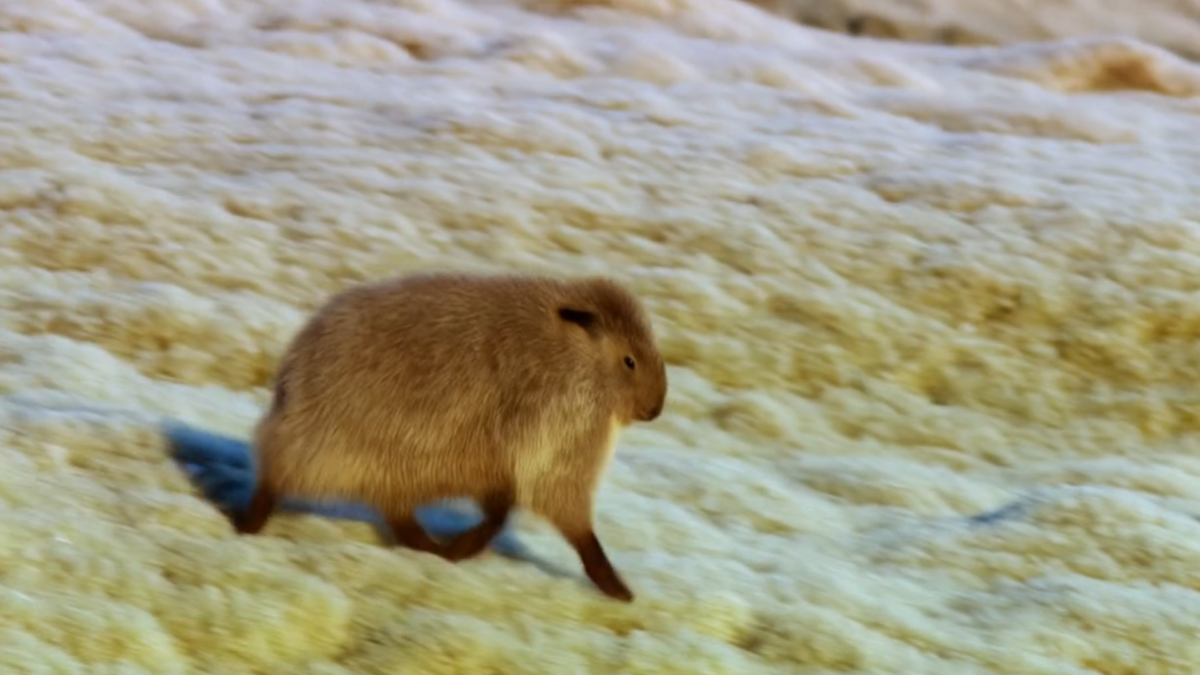
This is the question we are asked more than any other. It is also, quietly, the wrong place to start.
To ask if a wild haggis is real assumes there are only two options, real or not real. That framework feels neat, but it does not hold for everything. The wild haggis occupies a stranger territory, one that slips between categories. People who have walked the Highlands at first light, or heard the stories growing up, or felt that subtle sense of recognition without quite knowing why, tend to understand this already.
The problem with the question
The question leans on the idea that reality must be proven, measured, contained. Yet we do not treat most meaningful things that way. Memory is real. Belonging is real. The sharp stillness of a hillside at dawn, when something shifts just beyond sight, that is real too. Whether it can be captured or catalogued is not the point.
The wild haggis does not settle into a fixed description. It resists that kind of handling. What we refer to as the wild haggis animal is better understood as something that emerges between observer and landscape. It is part creature, part encounter, part inheritance. Within the Foundation, we call this relationship the Haggis Way.
The Haggis Way
The Haggis Way sits at the centre of our work. It describes how the haggis becomes real through engagement, not distance. You do not stand apart and study it as a specimen. You meet it, briefly, sometimes unexpectedly.
Each encounter differs. It carries traces of your own history, your connection to Scotland, your sense of place, even your readiness to notice what others pass by. Two people can stand on the same slope. One sees a movement, a shape, something unmistakable. The other sees only wind in the grass. Neither is mistaken. The difference lies in the meeting, not the ground beneath their feet.
Through this lens, haggis scoticus is not just a species label. It becomes a way of describing an experience rooted in landscape and identity. Scotland here is not a boundary on a map. It is something felt, something carried, something that persists even at a distance.
Why the question matters
Few creatures, real or otherwise, provoke the same response as the wild haggis. People hear about it and something lands. Not just curiosity, but recognition. A memory surfaces. A connection sharpens. It can feel like being reminded of something half forgotten.
That reaction matters.
For many with Scottish roots, whether nearby or far removed, the wild haggis acts as a thread. It leads back to something with weight and texture, not a caricature or a novelty, but something that feels intact. Something that either resonates or does not.
Those who arrive at the Foundation often recognise that feeling straight away.
The question nobody asks
Almost everyone asks if the wild haggis is real. Very few ask why they needed to know.
Yet the question lingers for a reason. It brought you here. It held your attention. And for many, what sits underneath is not really about an animal at all. It is about reconnecting with a place, or a sense of belonging that feels just out of reach.
That is where the Foundation comes in. We are a small organisation with a focused aim. We document the wild haggis with care and seriousness. Our work includes field guides, observational surveys, and exhibitions that continue to grow year by year. More than that, we have built a community of people who share an interest in this quietly unusual subject.
Some arrive out of curiosity. Most stay because the connection runs deeper than expected.
So, is a wild haggis real?
You likely sensed the answer before you finished reading.
The wild haggis is as real as the landscape it inhabits, as real as the people who seek it out, as real as the question stayed with you, and as real as the reason you are still reading.
Welcome to the Haggis Wildlife Foundation.