
The Most Famous Wild Haggis
April 26, 2026
Haggis Animal: Scotland’s Wild Haggis, History, Folklore & Regional Varieties
June 28, 2026The Round Woodland Haggis: Witnessing the Great Summer Migration in Glen Affric
Deep within Glen Affric, beneath towering Scots pines and drifting Highland mist, one of Scotland’s strangest seasonal spectacles quietly unfolds each summer. Hidden among the moss and heather, the elusive Round Woodland Haggis begins her migration.
Very few people ever see one.
Fewer still realise what they are looking at.
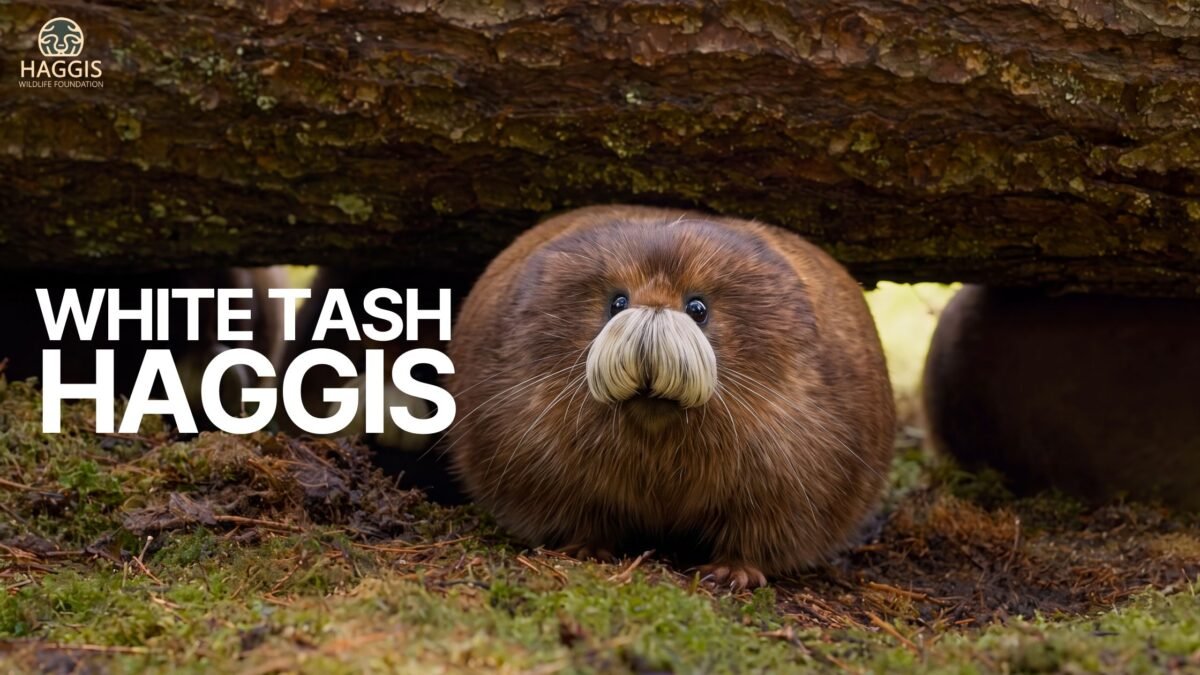
Native only to the ancient forests of the Scottish Highlands, the Woodland Haggis is a shy, spherical, three-legged mammal perfectly adapted to life on the forest floor. For most of the year she remains hidden beneath tangled roots and thick bracken, emerging only under the cover of dusk. But when summer arrives, something changes deep within the woodland.
The migration begins.
A Creature Built for the Forest Floor
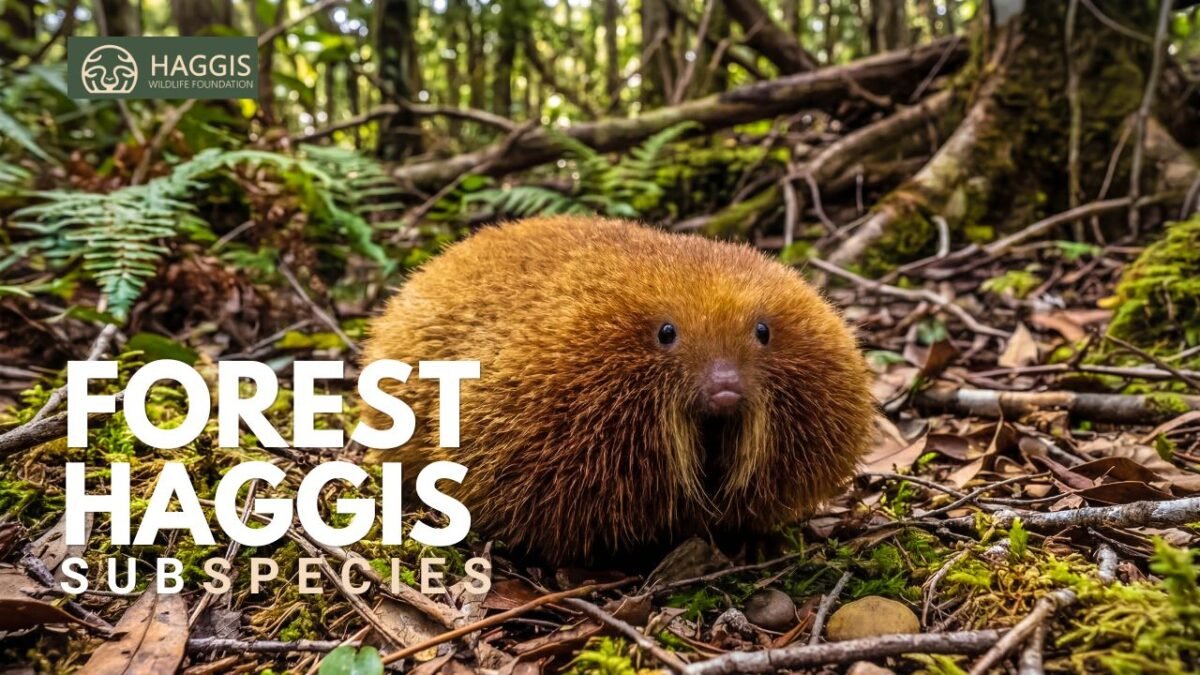
The Round Woodland Haggis is small, broad, and remarkably round, with a dense orange coat designed to withstand the bitter Highland winters. Her unusual anatomy sets her apart from every other known haggis species in Scotland: two short legs at the front, balanced by a single powerful rear leg that gives her an unmistakably uneven, rolling gait.
It is not graceful.
But through thick woodland and uneven ground, it is surprisingly effective.
Most Round Woodland Haggis live alone in shallow burrows dug beneath old Scots pines, where they line their nests with moss, pine needles, and dry fern. During the colder months they rarely venture far, surviving on roots, fungi, woodland berries, and whatever can be foraged beneath the snow.
Life in the Half-Light
Naturally timid, the Round Woodland Haggis avoids open ground whenever possible. Before leaving the safety of her burrow, she performs a curious ritual: rolling through wet bracken and peat to disguise her scent from predators, particularly the notoriously aggressive Flat-Heed, one of the few animals known to hunt haggis successfully.
When threatened, she relies not on speed, but deception.
The haggis will freeze completely, puff out her thick coat, and emit a long, low wheezing call eerily similar to the distant drone of bagpipes echoing through the glen. Researchers believe many predators instinctively avoid the sound, associating it with nearby humans.
For such a small creature, it is an unexpectedly clever defence.
Coexistence with Campers
Despite her nervous nature, the Round Woodland Haggis has gradually adapted to the seasonal arrival of campers throughout Glen Affric. Over generations, she has learned that where there are tents, there are usually leftovers.
As campsites fall silent and fires burn low, she emerges cautiously from the treeline to investigate. A dropped biscuit. A forgotten crust of bread. The occasional crisp scattered in the grass.
She is not a thief by nature.
She simply gathers what has already been abandoned.
There is, however, one campsite item for which the Round Woodland Haggis appears to have a particular weakness.
Whisky.
Naturalists working in the area have reported haggis repeatedly returning to unattended bottles of single malt left beside tents or campfires. Drawn by the sharp peaty scent, the creature carefully nudges bottles with her snout until the remaining whisky spills onto the moss below.
Why she does this remains uncertain.
Some researchers believe the alcohol aids digestion after long nights foraging in dense woodland. Others suspect the explanation is considerably simpler.
She just likes it.
The Great Summer Migration
A group of haggis is known by scholars as a clatter, and without a clatter, the Great Summer Migration cannot begin.
According to Highland folklore, summer officially starts the moment one Round Woodland Haggis spots another crossing the forest floor. From there, the gathering begins slowly. Two haggis become four. Four become dozens. Over several nights, the woodland quietly fills with movement as the clatter assembles beneath the trees.
Then, almost without warning, they begin to roll.
The migration itself is unlike anything else in the natural world: hundreds of round haggis moving steadily through the heather in a slow, determined tide toward the inner forest and the rich summer feeding grounds beyond.
There is no stampede. No noise. No dramatic spectacle.
Only the soft rustling of heather and the occasional distant wheeze of bagpipe mimicry drifting through the trees.
It is gentle, strangely organised, and rarely witnessed by human eyes.
And here in Glen Affric, if you know where to look, it is still happening.
Frequently Asked Questions
Where does the Round Woodland Haggis live?
The Round Woodland Haggis is found almost exclusively within the ancient woodland of Glen Affric in the Scottish Highlands.
How many legs does the Round Woodland Haggis have?
Three. Two at the front and one at the rear, giving the species its distinctive rolling movement across uneven ground.
When can the Round Woodland Haggis be seen?
The species is most active during early summer, particularly in the weeks leading up to the Great Summer Migration.
Is the Round Woodland Haggis dangerous?
Not at all. The Round Woodland Haggis is a shy and gentle creature whose primary defence is to imitate the sound of distant bagpipes in an attempt to scare predators away.