
The Garden Wild Haggis Toy
September 22, 2026
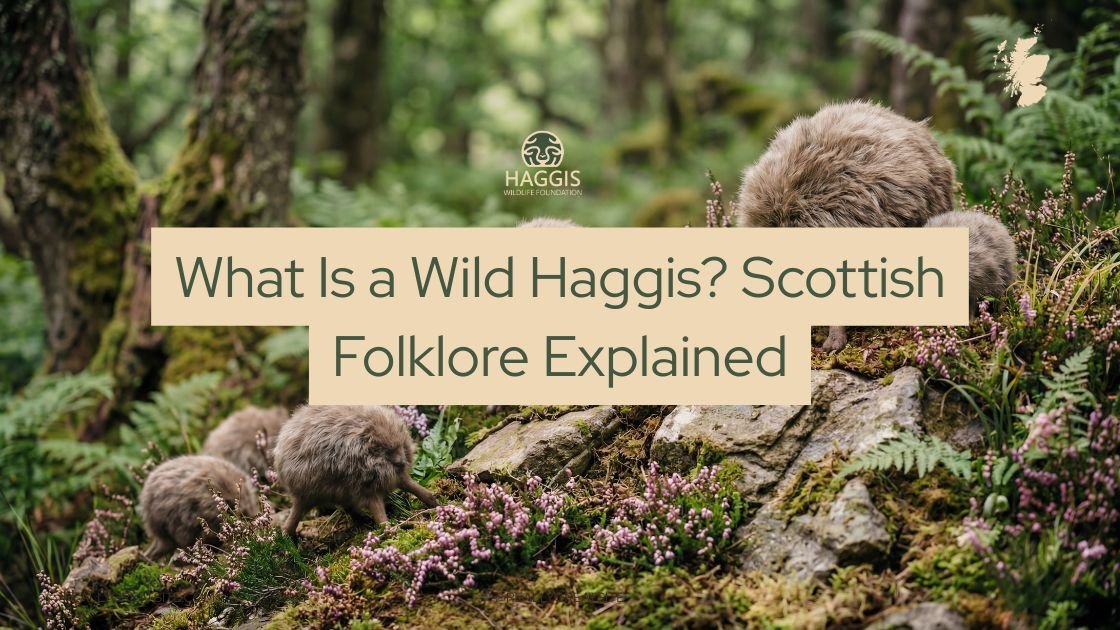
Wild haggis • Scotland • Living folklore
What is a wild haggis?Scottish folklore explained
A small creature, an uneven pair of legs and a story that belongs to Scotland. Discover the familiar tale of the wild haggis—and the much larger world growing around it.
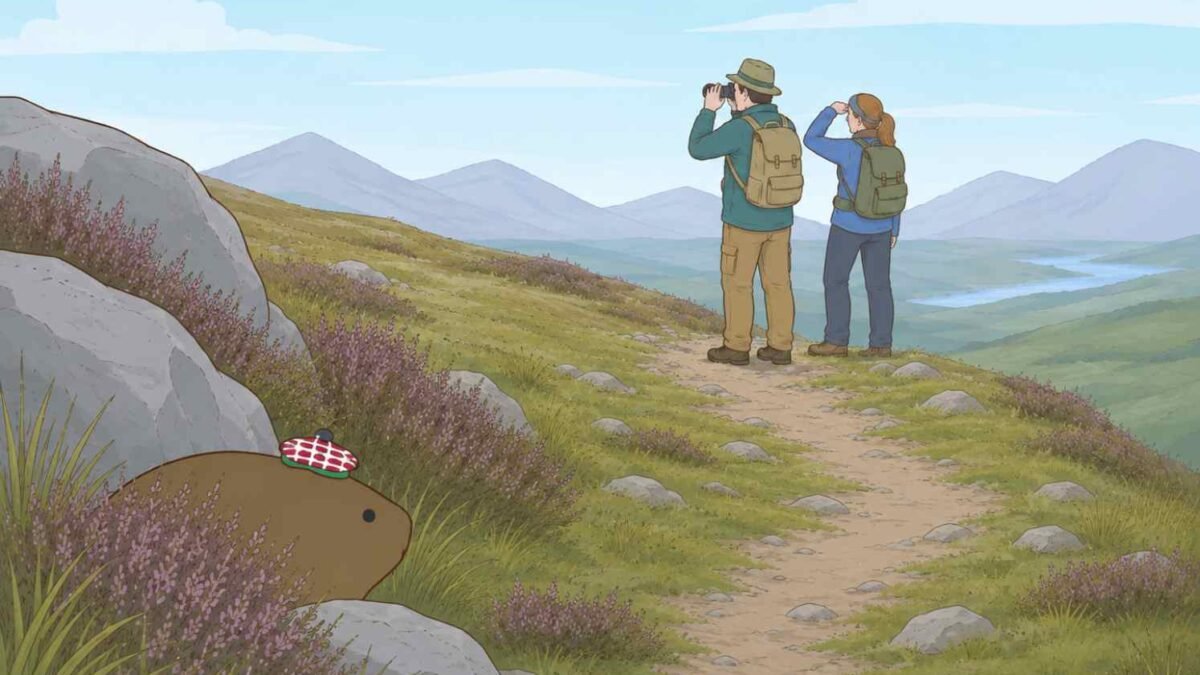
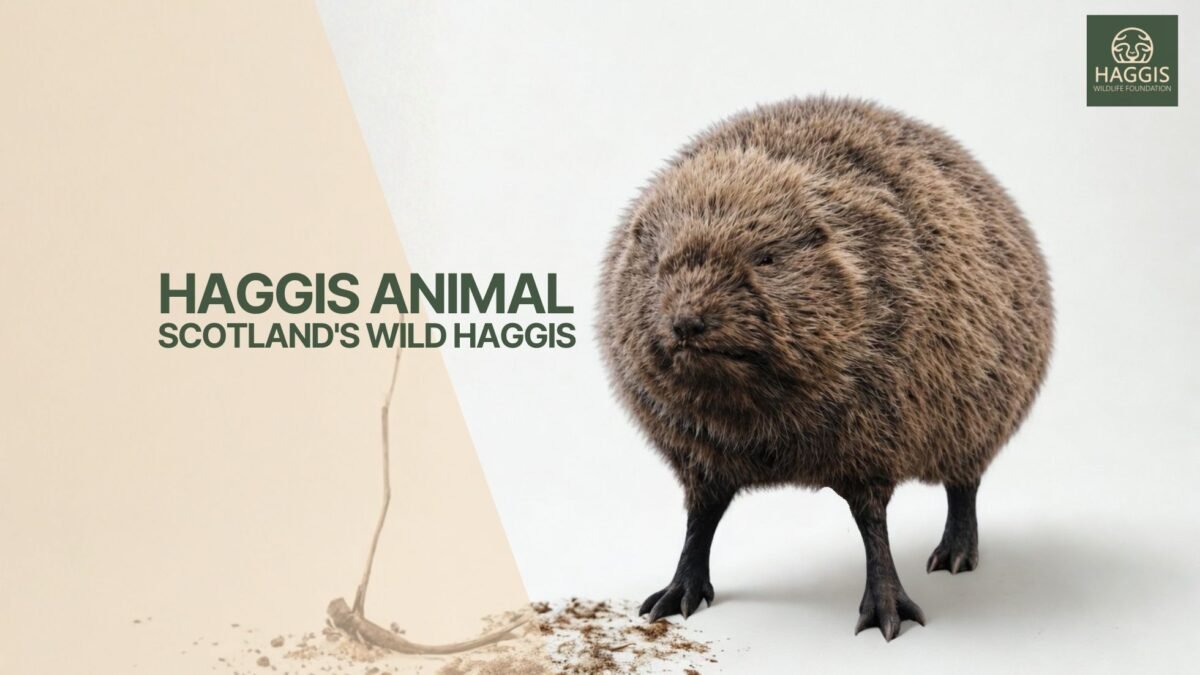
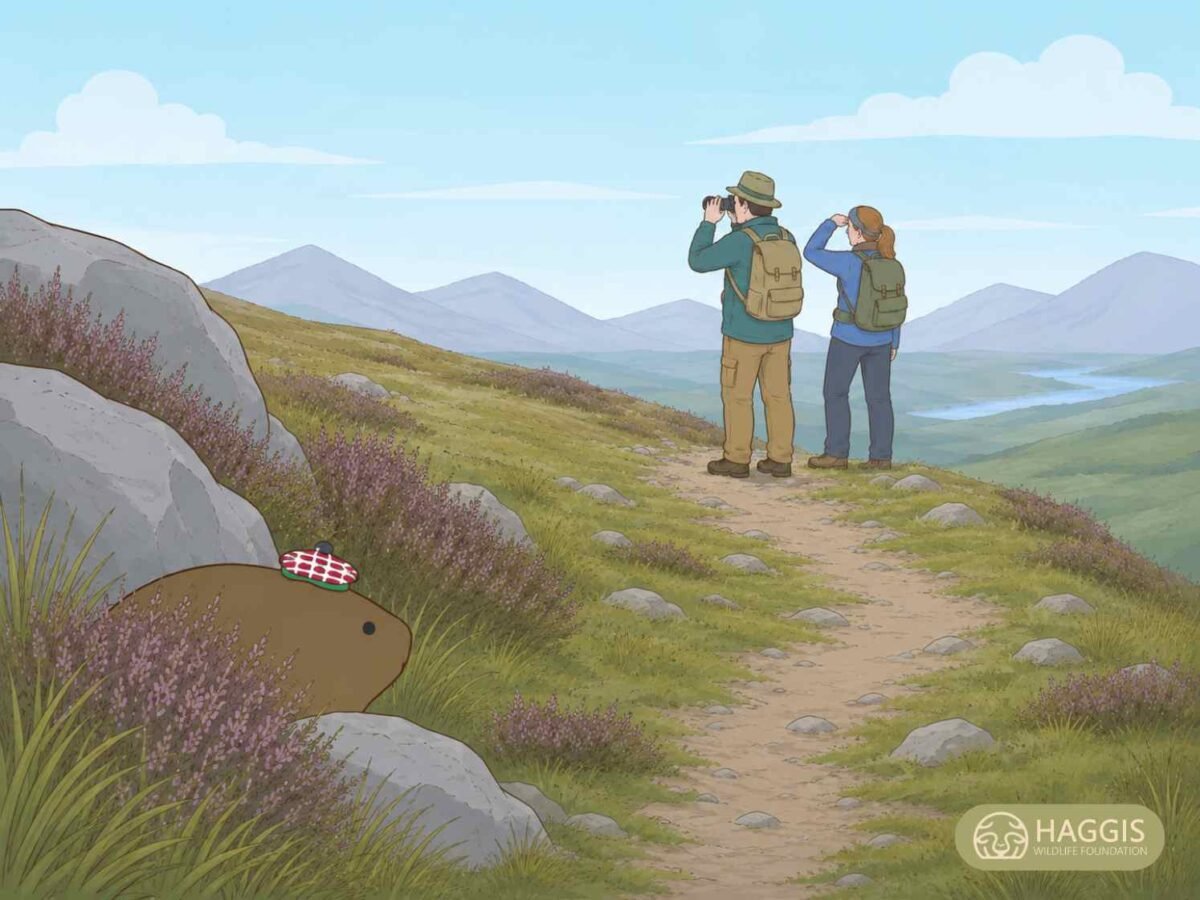
A wild haggis is a small creature from Scottish folklore, said to live among the Highland hills. In the familiar story, its legs are shorter on one side than the other, allowing it to run around steep slopes without falling over.
There is, of course, a catch: it can only travel comfortably in one direction. That simple idea is at the heart of the tale. It gives the haggis a home, a peculiar way of moving and a problem anyone can picture. From there, the storyteller can take you almost anywhere.
The wild haggis of the Scottish hills
The classic account describes an elusive little animal perfectly suited to its hillside. Its shorter legs stay on the uphill side, while the longer ones reach down the slope. In some tellings, catching one involves approaching from the opposite direction and taking advantage of its awkward arrangement of legs.
The tale is often offered as an answer to a visitor’s question about haggis. The food and the folklore share a name, but the creature belongs to storytelling; the haggis served at the table is Scotland’s traditional savoury dish. The pleasure lies in hearing the animal described with the confidence usually reserved for deer, grouse or any other familiar inhabitant of the hills.
It is an easy story to join in with. Ask where the creature sleeps, how quickly it runs or what happens when it needs to turn round, and there is room for another detail. You do not need a long introduction or a complicated history. You need a hill, an unusual animal and somebody willing to tell you about it.
Why the wild haggis belongs to Scotland
Scotland’s stories are closely tied to its landscape. Lochs, mountains, coastlines and ruined castles give people places in which to imagine extraordinary things. The wild haggis fits naturally into that tradition: its very shape is explained by the steep ground beneath its feet.
Its humour is part of its character. A story can make people laugh and still mean something to them. The person telling it, the place where you first heard it and the moment you realised how those uneven legs were supposed to work can all become part of the memory.
A story belongs to a place because people keep telling it, enjoying it and making room for it in their lives.
The wild haggis deserves its place alongside Scotland’s other stories on those terms. It does not need the same history as a kelpie or the same reputation as the Loch Ness Monster. It has its own voice: affectionate, matter-of-fact and full of Scottish mischief.
To dismiss it as nothing more than a visitor’s joke misses much of its appeal. The telling is itself a shared experience. For a few moments, an ordinary hillside becomes somewhere worth looking at twice. That is a small but valuable thing for a story to do.
A modern chapter in Scottish folklore
The Haggis Wildlife Foundation takes that familiar starting point and asks what happens next. What if you could follow the creature beyond its first appearance in the story? What would you notice about its habits? How would one kind of haggis differ from another?
The Foundation describes its work as a folklore and storytelling initiative. Its films, online stories, articles and community give the wild haggis a continuing life in the modern world. Scottish folklore becomes something people can watch, explore and talk about together.
The natural-history approach is central to that experience. A species guide encourages you to look closely. A film gives you time to become interested in an animal. A field note leaves you with something to look for. Each format adds another way into the same story.
This is how the Foundation expands the wild haggis beyond the familiar hillside anecdote. The first explanation becomes the beginning of an adventure, with room for different animals, recognisable places and new encounters. The warmth and humour of the original remain, while the world around it grows.
From a Highland hillside to your own garden
A larger world needs somewhere welcoming to begin. In the Foundation’s lore, that first encounter is the Common Garden Haggis. You can start with the familiar edges of a garden before turning your attention to the wider Scottish landscape.
The Common Garden Haggis
The Common Garden Haggis, Haggii s. hortensis, is the beginner’s species. Small, round and curious, it keeps close to bushes, flowerpots and garden sheds. It has three legs and runs comfortably in one direction, circling the garden in its own peculiar fashion.
That makes a useful connection with the classic tale. The familiar difficulty with direction is still there, now given a different setting and a clearly recognisable animal. A patch of garden can hold an entire little adventure.
The Stirling White Tash
The Stirling White Tash Haggis offers another introduction. Its pale facial markings resemble a generous moustache, giving it both its name and an immediately recognisable appearance. The word “tash” becomes something a young reader can learn and remember through the animal.
Details like these give each haggis an identity. Once you can recognise one, you have a reason to discover another. The pleasure moves from simply hearing about a wild haggis to noticing what makes each kind different.
These modern species and their details belong to the Foundation’s developing world. Giving them that clear place in the story allows the familiar folklore and new imagination to sit comfortably together.
Giving the next storyteller somewhere to begin
For a child meeting the wild haggis for the first time, a short film or an illustrated guide can be the doorway. For someone who remembers hearing the hillside story years ago, it can be a welcome return to something familiar—with much more to discover.
The Foundation brings those audiences into the same world. Someone can arrive through a film, learn to recognise a species and then pass the story on. A person who has never visited Scotland can still become curious about its places, language and sense of humour.
There is room here for affection as well as amusement. Once an animal has a face, habits and a place to belong, you can become fond of it. You want to know where it is going. You remember its name. You look forward to seeing it again.
That continuing interest is what gives this modern folklore its possibilities. The wild haggis can carry a longer story, while still being introduced in a sentence simple enough to share across a kitchen table.
The wild haggis story carries on
What is a wild haggis? It is the little creature said to run around Scotland’s hills on uneven legs. It is also a story people can enjoy telling, a familiar piece of Scottish humour and an invitation to imagine what might be moving just out of sight.
Through the Haggis Wildlife Foundation, that invitation now opens onto a much larger world. There are animals to recognise, films to follow and field guides to explore. The old hillside tale still has its place. Now there is somewhere to go after you have heard it.
Begin with the Common Garden Haggis. Every haggis spotter needs a first encounter.
The traditional hillside account is summarised from Ben Johnson’s “Haggis, national dish of Scotland” at Historic UK. Cultural and food context: VisitScotland’s Scottish myths and legends and haggis guide. The Foundation’s approach and modern lore are drawn from its About page, main website, and the Garden Haggis and White Tash pages linked above. Sources consulted 4 October 2026. The discussion of the story’s meaning is original editorial interpretation. Modern species descriptions are presented as Foundation folklore; the highlighted passage is original article text, not a historical quotation.